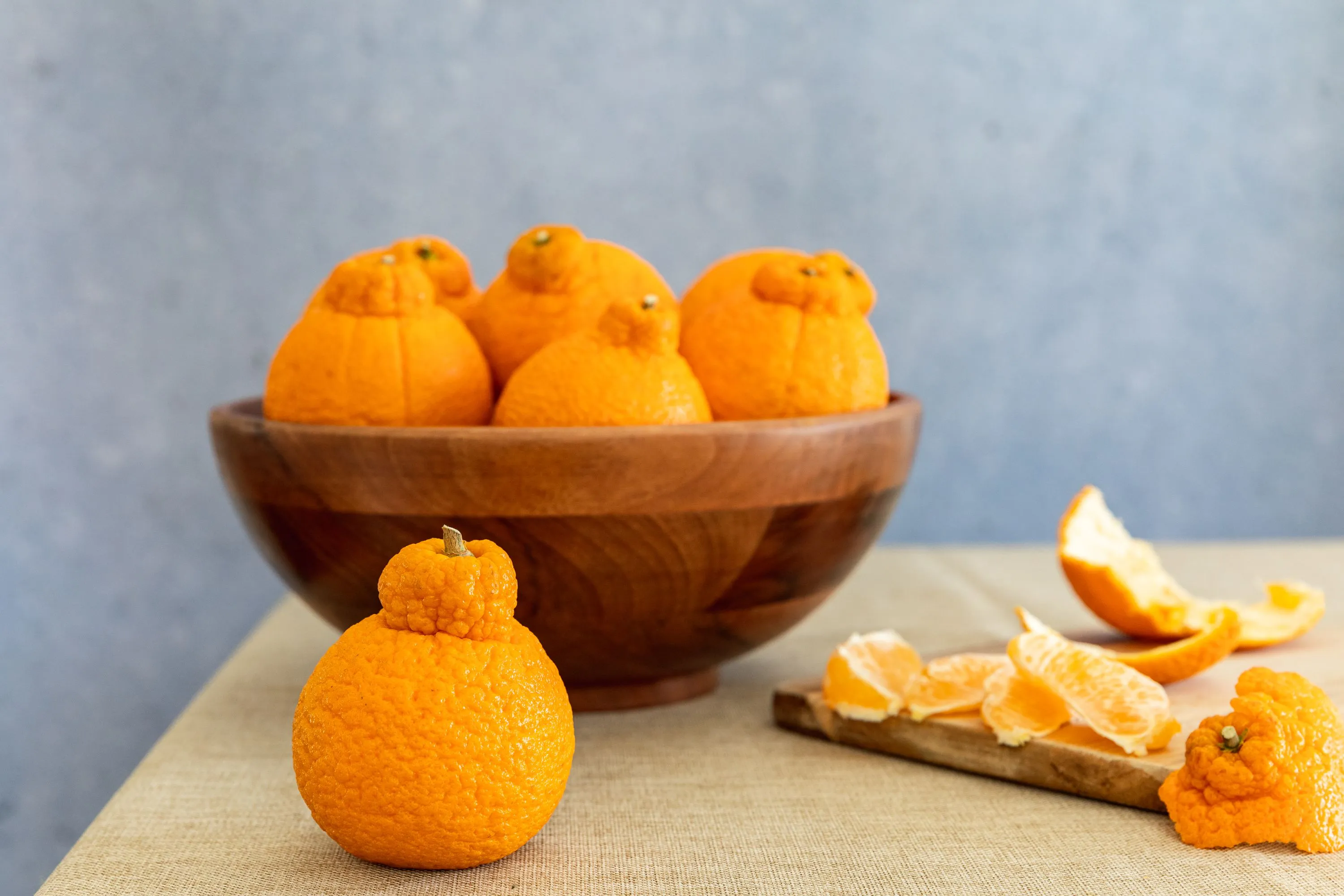
On your recent visit to the grocery store, you may have noticed an unusual-looking fruit labeled "Sumo Citrus," but its odd appearance may have kept you from taking a few home to try. Next time, don't pass them by! This giant variety of oranges is in peak season between January and April. Here's everything there is to know about Sumo Citrus so you can feel confident buying some on your next trip to the store.
What Is Sumo Citrus?
Sumo Citrus is the brand name of what's known elsewhere as the dekopon. It's a medium-sized, bright orange citrus fruit, most easily distinguished by the sumo wrestler-style topknot bump on the top (hence the name). The dekopon dates back to 1972 in Japan.
All the wonderful citrus varieties are crossbreeds of three base fruits: the pomelo, the mandarin, and the citron. From the pomelo, we get bitterness (as in the grapefruit); from the mandarin, we get sweetness; and from the citron, acidity (bitterness again). Crossbreeds are bred with crossbreeds repeatedly, eventually resulting in citrus varieties like ruby red grapefruits, satsumas, Cara Cara navel oranges, Meyer lemons, and more.
What Do Sumo Citrus Taste Like?
The dekopon, or Sumo, is a cross between Satsuma, orange, and Mandarin. The Sumo is bred for sweetness (perfect for your favorite citrus-infused desserts) and is even sweeter than Clementines. Sumo oranges were also bred to be easy to eat, with easily separated segments, no seeds, and skin that peels away cleanly, making them a cinch to enjoy. It's also quite big for a mandarin: about the size of a navel orange.
Nobody knows how the topknot got there; such occurrences are not unusual when citrus fruits are crossbred. The Sumo oranges took upwards of 30 years to breed, and the trees are slow to mature, which is why this sweet citrus is often more expensive than other citruses. In Japan, where it's from, Sumos are often given as gifts.
How to Pick Sumo Citrus
If the Sumo orange has a slight give with a gentle squeeze, it's ready to peel and enjoy. Sumo Citrus naturally has bumpy skin and can develop slight blemishes such as discoloration, scarring, or spotting. These are all just cosmetic and don't impact the flavor, so don't let their somewhat unappealing appearance keep you from enjoying them.
Sumo Citrus Nutrition
You can enjoy an entire Sumo Citrus to get more than your day's worth of vitamin C at a whopping 163 percent. You'll also score the bonus of a bit of potassium (10 percent), iron (3 percent), calcium (3 percent), and vitamin D (1 percent). Here are the nutrition facts per serving (one Sumo Citrus): 147 cal., 0 g fat, 0 g chol., 35 g carb., 3 g fiber, 29 g sugars, 3 g protein.
Sumo Citrus in the United States
Sumo Citrus started appearing in the United States around 2011, courtesy of a California citrus company called Suntreat. Amidst all the hype, Suntreat officially re-branded to own the Sumo Citrus name. It can now be found in grocery stores nationwide—including Target and Meijer—but it's not cheap. Expect to pay about a pound (each Sumo is around one pound), much more than clementines or navels, but roughly on par with other specialty citrus, like blood oranges or key limes. Give them a try!
Grow These Unique Fruits for Big Flavor
- How to Grow Dragon Fruit from Seed
- How to Grow Papaya from Seed in 6 Easy Steps
- How to Plant a Mango Seed and Successfully Grow it In 5 Steps
- How to Grow Persimmon Trees from Seed
- How to Plant and Grow a Guava Tree